
India's household debt climbed to 41.3 per cent of gross domestic product (GDP) at the end of March 2025, marking a sustained rise from its five-year average of 38.3 per cent, with consumption-related loans accounting for bulk of the borrowings, the Reserve Bank of India (RBI) said in its Financial Stability Report.

Powered by a 9.2 per cent growth in the manufacturing sector, India's economic growth stood at 6.9 per cent for 2004-05 fiscal compared to 8.5 per cent during the previous financial year.

India's online retail market concluded 2025 with electronic retail (e-retail) gross merchandise value (GMV) reaching $65-66 billion, a 19-21 per cent increase, according to a report by Bain & Company and Flipkart. This growth is significantly driven by GenZ shoppers and the rapid expansion of quick commerce, which has emerged as a global leader.
India's projected 8.1 per cent GDP growth rate this year was "quite achievable" as investors' confidence had gone up substantially due to sustained economic reforms, a noted economist said on Monday.

IT stocks had their worst first half fall in decades, with the Nifty IT index declining 31% in the January-June 2026 period, its biggest decline in the first six months of a calendar year since 2003.
The country's economy grew by a robust 9.2 per cent in July-September 2006-07 compared to 8.4 per cent in the second quarter of last year on the back of high growth in manufacturing and services sectors.

Chief Economic Advisor Krishnamurthy Subramanian said India's economy will witness a decline in the current fiscal, but the drop will be limited if there is an economic recovery in the October-March period.

We who were dreaming of being the third largest economy in dollar terms, have slid back to sixth, thanks to the falling rupee. We are moving about with begging bowls for investments and trade opportunities, which will be a while in materialising, if ever, notes Shreekant Sambrani.

India's urban areas are projected to contribute 70 per cent of gross domestic product in 2025-26, up from 45 per cent in the 1990s, according to a report by Dun & Bradstreet.

The country has been clocking a sub-5 per cent growth for the past two financial years, mainly on account of slowdown in investments.

The previous high in quarterly GDP growth was recorded in the January-March quarter of 2015-16 at 9.3 per cent.
Financial services major BNP Paribas on Wednesday cut India's GDP growth forecast for the current fiscal to 3.7 per cent from 5.7 per cent earlier, saying the country's 'macro muddle' is fast approaching crisis proportions.
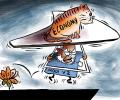
India's growth outlook has weakened sharply this year, with a crunch that started with the non-banking finance institutions spreading to retail businesses, car-makers, home sales and heavy industries.

'We believe the truth is in the middle, and that India is at an important crossroads.'

India Ratings & Research (Ind-Ra) has projected the aggregate fiscal deficit of states to rise to 3 per cent of gross domestic product (GDP) in 2026-27 (FY27), from an estimated 2.8 per cent in 2025-26 (FY26), citing higher revenue expenditure amid election-related pressures and scheme cost-sharing requirements.

New Delhi will substantially reduce tariffs on industrial and agricultural goods while continuing to protect sensitive sectors. Tariffs on some agricultural products that are not traditionally considered sensitive will be brought down to zero, while in the case of relatively sensitive items, duties will be reduced in a graded manner and quotas will be imposed.

India's high cost of capital due to relatively shallow corporate bond markets, limited institutional investor depth, sovereign risk premia, and regulatory restrictions on capital flows, is a constraint on private investment and long-run growth, the Economic Survey, authored by Chief Economic Advisor (CEA) V Anantha Nageswaran, said.
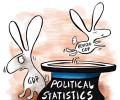
The Economic Survey 2022-23 (FY23), to be presented a day before Union Budget 2023-24 (FY24), is likely to project India's real gross domestic product (GDP) growth between 6 per cent and 7 per cent for FY24, Business Standard has learnt. The broader theme of the Survey could be on how India has dealt with two years of a global pandemic and the ongoing geopolitical disturbance, the strengths and weaknesses that emerged, and what lessons may be learnt. The much-awaited Survey will be the first one by Chief Economic Advisor V Anantha Nageswaran and his team in the finance ministry's economic division.
The Reserve Bank of India on Wednesday retained the economic growth projection for the current financial year at 10.5 per cent, while cautioning that the recent surge in COVID-19 infections has created uncertainty over the economic growth recovery. In its last policy review, the RBI had projected a GDP growth rate of 10.5 pc for FY'22. Taking various factors into consideration, it said, "the projection of real GDP growth for 2021-22 is retained at 10.5 per cent consisting of 26.2 per cent in Q1, 8.3 per cent in Q2, 5.4 per cent in Q3 and 6.2 per cent in Q4."

Highlights of the Economic Survey 2025-26

'My concern is that, although everything is expressed in monetary terms, you are effectively combining values that have been adjusted using different price measures.'

India's economy grew 7.8 per cent in the March quarter, pushing up the annual growth rate to 8.2 per cent, according to official data released on Friday. Growth in the January-March period was lower than the 8.6 per cent expansion in the December quarter.

Benchmark lending rates unchanged with repo rate at 5.25%

The Indian rupee depreciated by 52 paise to settle at 93.35 against the US dollar, driven by failed US-Iran peace talks, surging crude oil prices due to a potential US blockade of Iranian ports, and a global flight to the greenback. This geopolitical uncertainty is also leading to foreign capital withdrawal from domestic equities.
A United Nation's body on Thursday pegged down India's economic growth prospects to 5.1 per cent in 2003 from an earlier projection of 6.0 per cent, mainly due to the impact of Iraq war, Severe Acute Respiratory Syndrome.

Industrialists affirm their belief that the adverse effects of demonetisation and the goods and services tax are finally over.

The exchange rate of the rupee against the dollar may delay the economy's rise to become the fourth-largest.

'Congress needs a positive agenda rather than primarily picking up on two business houses.'

India's GST revenues experienced significant growth in March, reaching pre-tax cut levels, driven by increased imports and domestic sales. The report analyses the impact of tax rate changes and provides insights into future trends and economic stability.

India ranked 116th out of 147 countries in 2025 with an average score of 4.536.

The new IIP series based on the new base year, is expected to lead to better capturing of ground data

This year's Economic Survey and the Union Budget were more closely followed for more reasons than one.
The brokerage said the consolidated fiscal deficit, including that of the Union (3.6 per cent), the states (2.6 per cent) and the off-budget borrowings which are being resorted to increasingly is a worry.

West Bengal Governor RN Ravi has called for collective efforts to restore the state's past glory, highlighting concerns over economic and educational indicators. His remarks coincided with Chief Minister Mamata Banerjee criticising him for allegedly 'abusing' her instead of extending New Year greetings.
The Reserve Bank of India on Wednesday hiked the expected GDP growth for the year ending March 31, 2007 to 8.5-9 per cent.

India's economy could reach $20.7 trillion in terms of purchasing power parity (PPP) by 2030 and may emerge as the second-largest economy by 2038 with $34.2 trillion GDP, an EY report said on Wednesday. The report also said that with appropriate countermeasures, India can limit the adverse impact of higher US tariffs on selected Indian imports to about 10 basis points of real GDP growth.
The government on Tuesday projected a higher economic growth of 8.1 per cent for this fiscal from 7.5 per cent in 2004-05, far exceeding expectations of the finance ministry and Reserve Bank of India.

India's economy grew 7.6 per cent in the September quarter of this fiscal and remained the fastest-growing large economy, mainly due to better performance by manufacturing, mining and services sectors, the government data showed on Thursday. The gross domestic product (GDP) expanded by 6.2 per cent in the July-September quarter of 2022-23. India remained the fastest-growing major economy, as China posted a 4.9 per cent growth in July-September 2023.
India can withstand a possible short war over Iraq but a prolonged conflict may dampen growth prospects, says a Confederation of Indian Industry study.
